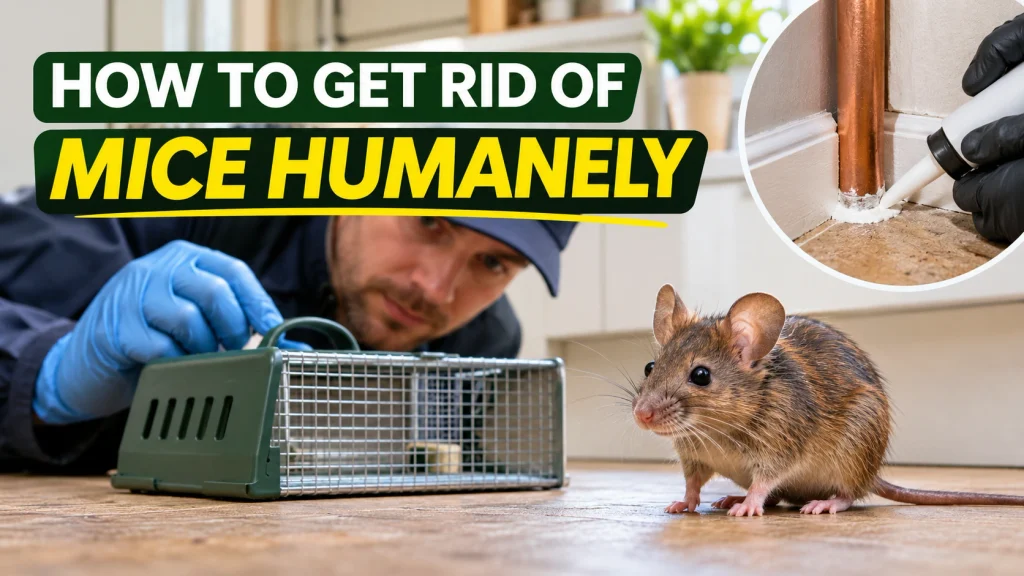
Finding mouse droppings in a kitchen cupboard or hearing scratching behind the walls can be upsetting. You want to protect your home, food and family, but you may not want to kill an animal simply because it has found its way indoors.
The problem is that a trap labelled humane does not guarantee a humane outcome. A mouse can become frightened, cold or injured while confined. Releasing it somewhere unfamiliar may also put its survival at risk.
The most responsible approach is to prevent mice from entering, remove the food and shelter attracting them, and deal properly with any animal already inside. And if you catch a mouse alive, you need to know what to do next. A house mouse deliberately caught as a pest should not simply be driven to a park and released. The recommended professional approach is prompt humane dispatch by someone competent to do it.
Can You Get Rid of Mice Without Killing Them?
Yes, you can prevent mice from entering your home without killing them. However, removing an established house-mouse infestation without any animals being killed is much more difficult.
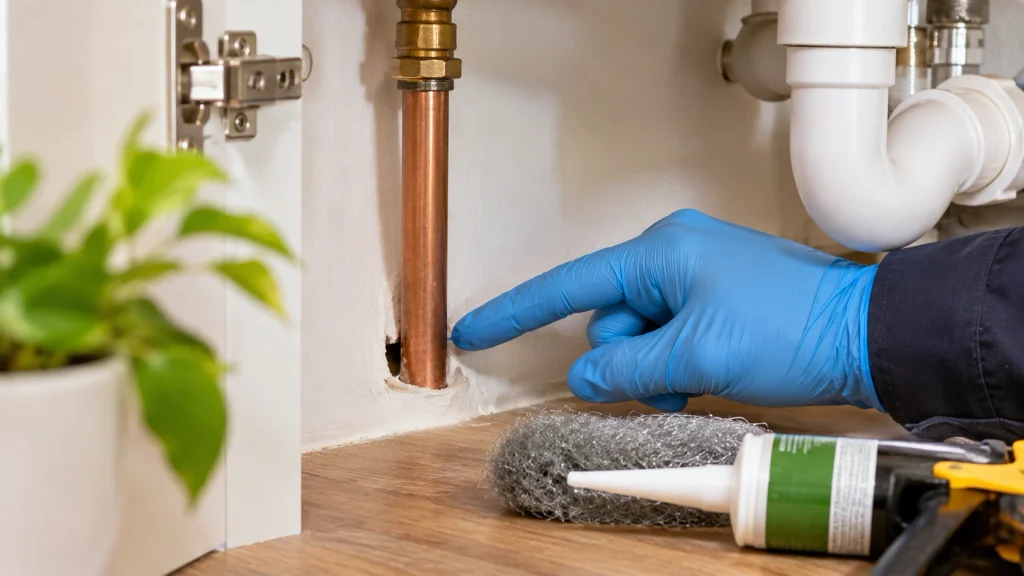
Start with the things that attract mice. Store dry food and pet food in sealed containers, clean up crumbs, close rubbish bins and avoid leaving food out overnight. Then look for the small gaps mice use to get inside.
Mice can squeeze through openings as small as 5mm, roughly the width of a pencil. Check around pipes, doors, windows, air bricks, floorboards and kitchen units. The British Pest Control Association’s advice on house mice explains why even small openings need attention.
Use suitable rodent-resistant materials to close gaps, but do not block ventilation. Also, do not seal a hole if mice could still be inside a wall or enclosed space. First establish where they are travelling and make sure proofing will not trap animals indoors.
If a mouse is already inside, prevention alone may not remove it. You may need a suitable control method or professional help. Think about the animal’s welfare and what will happen after capture before choosing a live trap.
What Is the Most Humane Way to Get Rid of Mice?
The best starting point is prevention, proofing and removing easy access to food and shelter. These steps address why mice enter and remain in a building, instead of repeatedly catching individual animals.
Live-capture traps are often marketed as a kinder alternative to killing. But keeping a wild mouse inside a small cage can cause serious welfare problems. It may become distressed, wet from condensation, cold or injured. A trap that keeps an animal alive for a short time does not necessarily protect it from suffering.
The RSPCA’s guidance on living with rats and mice explains these risks and why relocation is not a guaranteed humane solution.
For an active infestation, a suitable professional treatment plan should deal with the mice and the reasons they are getting inside. That may involve proofing, monitoring and an appropriate control method. Simply catching one mouse while leaving the entry point open can allow the problem to continue.
How Do Humane Mouse Traps Work?
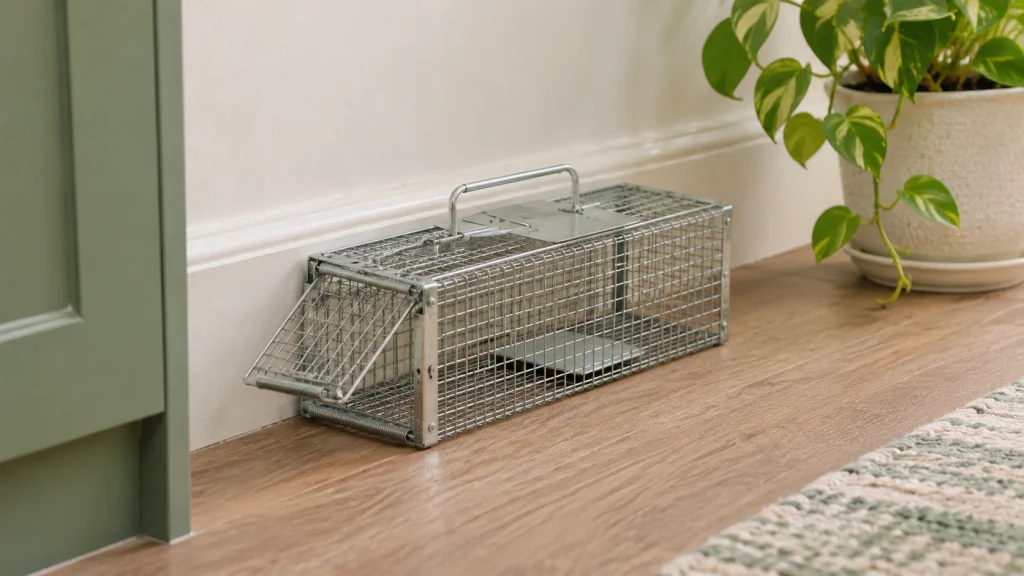
A humane mouse catcher is usually a small tunnel or enclosed cage with a door that closes when a mouse enters to reach the bait. The intention is to contain the animal without killing it immediately.
Some traps catch one mouse at a time. Others are designed to hold several. Neither type should be judged by its packaging or the word humane alone.
Before buying a live-capture trap, look for:
- Enough space for the mouse to move without becoming trapped against the mechanism.
- Good ventilation and a secure door.
- Smooth internal surfaces without sharp edges or obvious gaps that could catch a tail or foot.
- A design that can be inspected without handling the mouse.
- Clear instructions for checking and dealing with a captured animal.
Be particularly cautious with multi-catch traps. Holding several wild mice together can create additional welfare problems. Keeping them confined while waiting to catch more is not a suitable solution.
Most importantly, decide what you will do if the trap catches a mouse before you set it. A live-capture trap is not automatically a catch-and-release solution.
Do Humane Mouse Traps Actually Work?
Yes, live-capture traps can catch mice, but results vary. A mouse may avoid a new object, ignore the bait or take food without triggering the mechanism. A poorly positioned or faulty trap may also fail.
If you decide to use one, follow the manufacturer’s instructions and take these precautions:
- Choose the location carefully. Place the trap near signs of mouse activity, such as droppings or gnaw marks, rather than in the middle of an open room. Mice often travel close to walls and edges.
- Use a small amount of suitable bait. Avoid filling the trap with loose food. Follow the instructions for the particular design.
- Keep it away from children and pets. Choose a secure position where the trap will not be knocked, moved or exposed to extreme temperatures.
- Inspect it frequently. Do not set a live trap if you cannot monitor it and respond promptly when an animal is caught.
- Have a capture plan. Know who you will contact and how the animal will be dealt with before setting the trap.
The BPCA’s Code of Best Practice for Live Capture Trapping recommends that cage traps are inspected at least once a day. It also says that target animals should be humanely dispatched as soon as possible after capture. This is professional best-practice guidance, not permission to leave a trapped mouse unattended until the next day.
What Should You Do After Catching a Mouse?
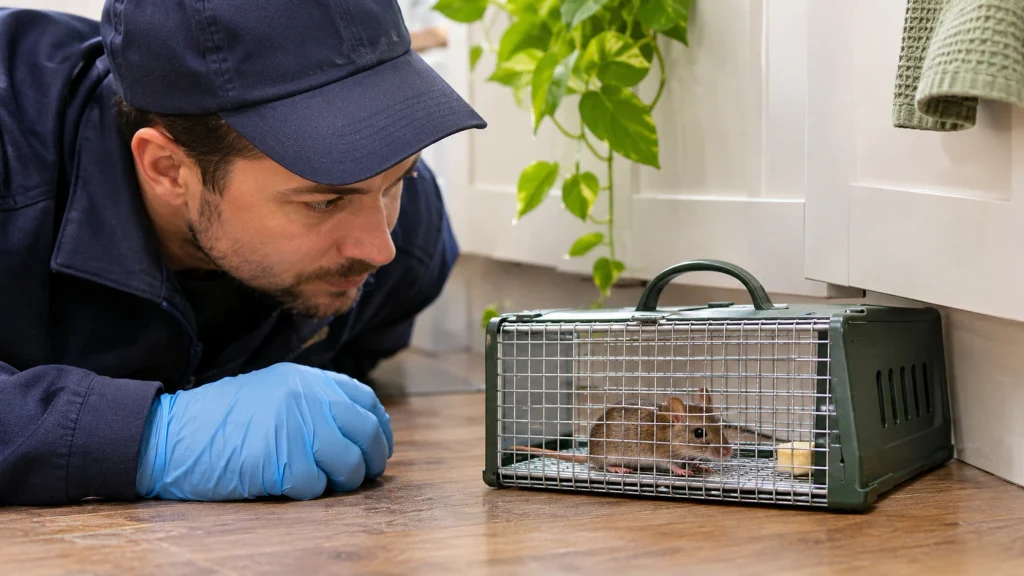
This is the part many people are unprepared for. You hear the trap close, look inside and find a live mouse. Should you release it, keep it or have it put down?
The answer depends on whether it is the house mouse you intended to catch or a different animal that entered the trap by accident.
First, keep children and pets away. Do not shake the trap, put your fingers inside or try to pick the mouse up. Keep it secure and away from extreme heat, cold and damp. Deal with the situation promptly.
If You Have Deliberately Caught a House Mouse
Do not routinely release it in a garden, park or field. Arrange prompt humane dispatch by someone competent to carry it out.
This is the recommended professional pest-control approach for a target mouse caught in a live-capture trap. The BPCA’s live-capture code states that target animals must be humanely dispatched as soon as possible after capture. The CRRU UK Code of Best Practice also advises that live traps are inspected regularly, at least daily, and that captured animals are humanely dispatched.
Why not release it somewhere else? A house mouse moved to unfamiliar surroundings may struggle to find food and shelter. It may face competition from other rodents and greater exposure to predators. There is no proven distance that guarantees it will survive. Releasing it close to your home may also leave the original entry problem unresolved.
What should you do now? If you set the trap yourself, contact a competent pest-control professional and explain that a live house mouse has been caught. Ask for prompt assistance with humane dispatch. If a pest-control company set the trap, contact that company immediately.
Do not attempt to kill the mouse yourself if you are not trained to do so. Do not drown it, freeze it, suffocate it or leave it confined while delaying the decision.
This professional recommendation is not a law requiring every householder to kill a mouse. It is the recognised approach in pest-control guidance for a target animal deliberately caught during a control operation. If you are not prepared to have a target mouse humanely dispatched, do not set a live-capture trap expecting to release it afterwards.
What If You Caught a Different Animal by Accident?
Sometimes a trap catches an animal other than the house mouse it was intended for. This is called a non-target capture.
The appropriate response is different. The BPCA’s live-capture code says non-target animals should be released unharmed as soon as possible, provided it is safe and lawful to do so.
Do not guess at the species if you are unsure. Some British mammals have specific legal protection, and some non-native species must not be released into the wild. Keep people and pets away and seek advice from a competent pest controller or appropriate wildlife service before deciding what to do.
What If the Mouse Is Injured, Weak or Distressed?
If the animal is bleeding, struggling, wet, barely moving or visibly injured, do not release it outdoors. Keep the trap secure, minimise noise and disturbance, and contact a veterinary practice or appropriate animal-welfare service promptly.
Explain that it is a wild mouse caught in a trap. A professional can assess whether it can be treated or whether humane euthanasia is necessary. The RSPCA’s advice for sick or injured rats and mice explains how to seek help.
What Does Humane Dispatch Mean?
Humane dispatch means ending an animal’s life in a way intended to avoid unnecessary pain, fear and prolonged distress. It is not the same as leaving an animal to die slowly or using an improvised method.
The person’s skill and the method used matter. If a target house mouse has been caught, contact someone competent to carry out humane dispatch promptly. If an animal is injured or unwell, a veterinary professional can assess whether treatment or euthanasia is appropriate.
The important point is not to leave a live mouse confined without a plan.
How to Deter Mice and Prevent Them from Returning
Catching one mouse does not prove that the problem is over. Other mice may still be present, or the same entry point may remain open.
Check behind kitchen appliances, beneath sinks, around pipework, under kitchen kickboards and near external vents. In London flats and terraced homes, shared walls, service ducts, cellars and adjoining properties can make the source harder to find.
For better long-term mouse prevention:
- Seal suitable gaps: Use durable, rodent-resistant materials around pipes, doors and other openings. Do not block air bricks or ventilation.
- Store food securely: Keep cereal, rice, flour, pet food and other dry goods in rigid, sealed containers.
- Manage household waste: Close bin lids and clear away food waste.
- Reduce nesting places: Remove unnecessary cardboard, paper piles and clutter from cupboards and storage areas.
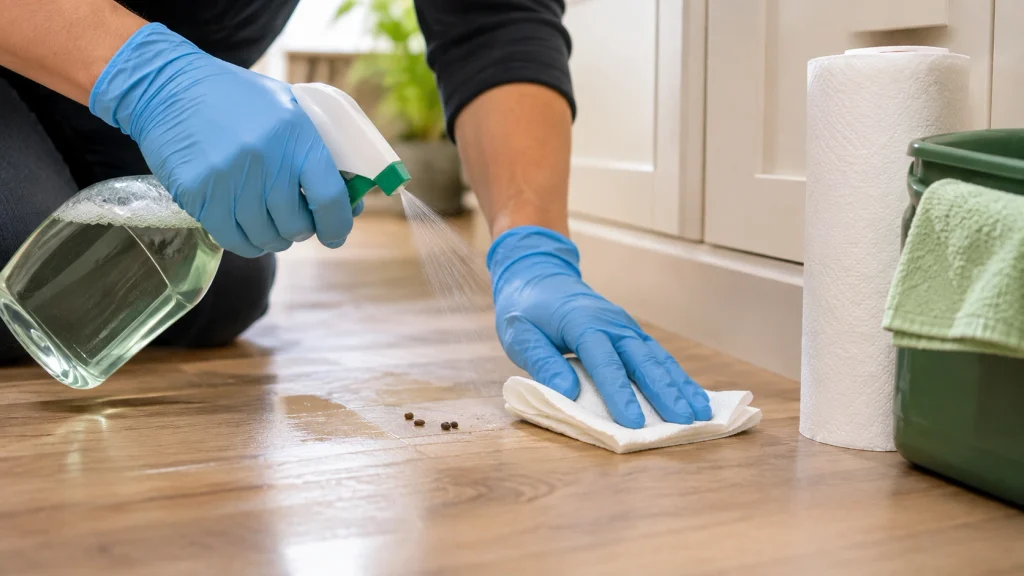
- Clean safely: Wear household gloves. Do not sweep or vacuum dry mouse droppings or nesting material. Use a damp disposable cloth or kitchen towel to collect it, then clean the surface and wash your hands. The UK Health Security Agency’s rodent hygiene guidance explains why dry sweeping and vacuuming should be avoided.
Peppermint oil, scented sachets and ultrasonic plug-in devices are often promoted as mouse deterrents. Do not rely on them to resolve an active infestation. They do not close entry gaps or remove food and shelter. Physical proofing and good food storage are much better foundations.
If you rent, report recurring mouse activity and possible structural gaps to your landlord or managing agent. In a shared building, the problem may involve communal areas or routes between flats.
When Should You Call a Professional Mouse Control Service?
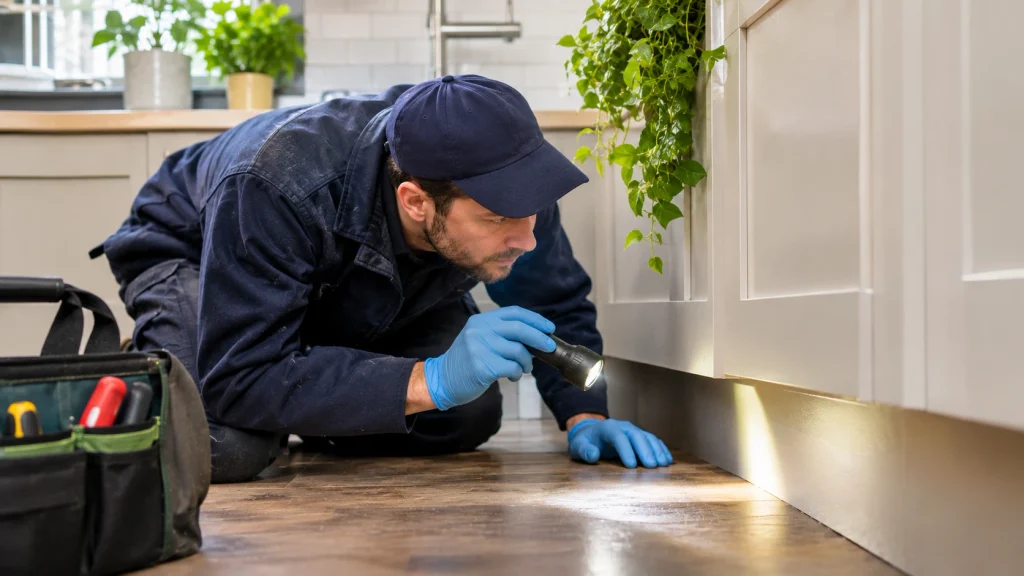
Professional help is worth considering if you continue to find fresh droppings, hear scratching behind walls or ceilings, see mice in several rooms, or cannot identify where they are entering.
It is also sensible to get advice if live traps have failed, the problem keeps returning, or you are unsure how to deal with a captured mouse.
Before choosing a provider, ask which control methods they use, how traps are monitored, what happens if a mouse is caught alive and how they intend to prevent further entry. Do not assume every company follows the same approach.
Correct Pest Solution provides mice and rats control in London. Explain your concerns about animal welfare when requesting advice. Ask the technician to explain the proposed treatment, what happens to any live-captured target mouse and how the property will be protected against further entry.
The aim should be to resolve the underlying problem, not simply catch one mouse and leave the access route open.
Frequently Asked Questions
Should I release a house mouse after catching it in a live trap?
No, not as the routine approach to a house-mouse infestation. Professional pest-control guidance recommends that target rodents caught in live-capture traps are humanely dispatched promptly by someone competent to do so. Relocation does not guarantee survival.
Is it cruel to use a humane mouse trap?
It can cause suffering if the mouse is left confined, becomes cold or injured, or is not dealt with promptly. A live-capture trap is not automatically humane simply because it does not kill the mouse immediately.
How often should I check a live mouse trap?
The BPCA’s live-capture code recommends inspecting cage traps at least once a day. A trapped animal still needs prompt attention, so do not treat that interval as a reason to delay dealing with a capture.
What should I do if a mouse is injured in a trap?
Keep the trap secure, avoid handling the animal and contact a veterinary practice or appropriate animal-welfare service promptly. Do not release an injured mouse or attempt to kill it yourself.
Are glue mouse traps legal in London?
No. In England, setting a glue trap to catch a rodent is an offence unless it is used under a valid licence. Licences are restricted to professional pest controllers and exceptional circumstances.