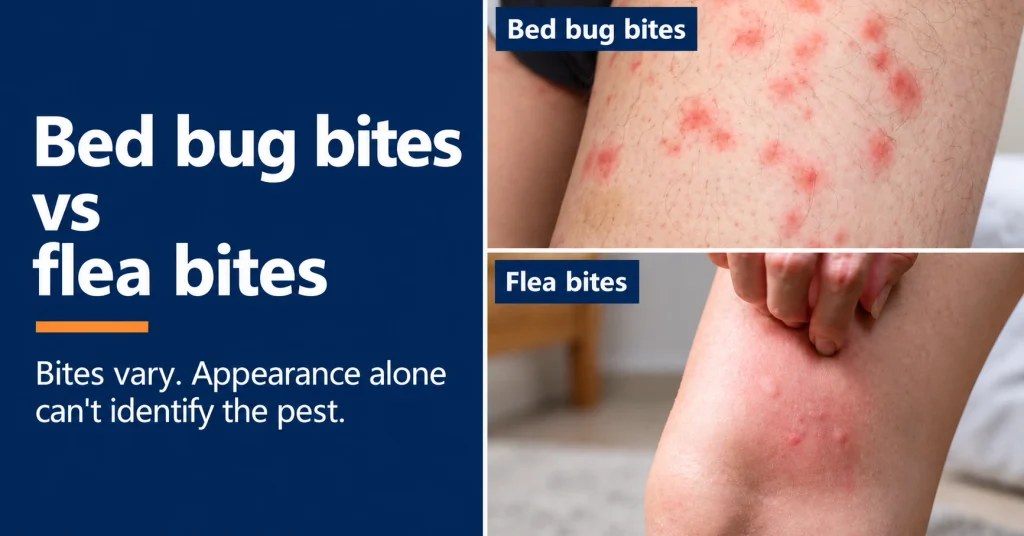
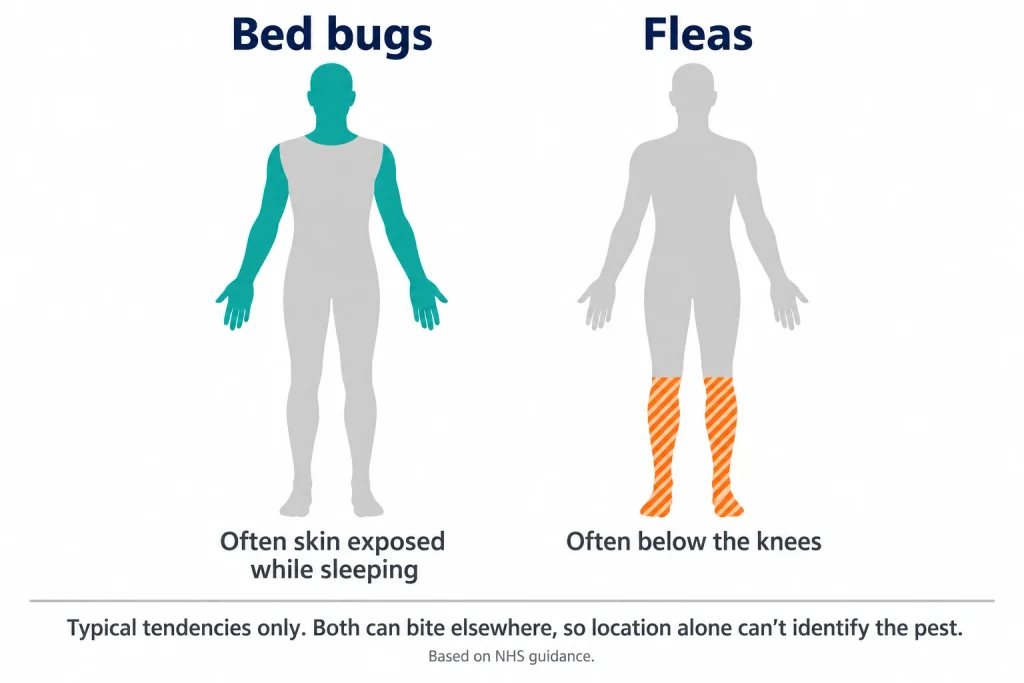
Waking up with itchy marks and not knowing what caused them can be worrying. Bed bug bites and flea bites can look very similar, so it’s hard to tell them apart just by looking at your skin. Bed bug bites often appear on skin left uncovered while you sleep, while flea bites are more common around the ankles and lower legs. But these patterns are not proof of which pest is responsible.
To find out what might be causing the bites, look for other signs around your home. Check the bed and bed frame, carpets, soft furnishings and places where pets sleep. This guide explains the usual differences, what to look for and what to do if you can’t find any signs.
Bed Bug Bites vs Flea Bites: Key Differences
Treat every row as a tendency, not a test.
| Clue | Bed bugs | Fleas |
|---|---|---|
| Where bites often appear | Skin exposed while sleeping, such as the face, neck and arms | Usually in groups below the knees |
| Pattern | Often in a line or grouped together | May appear in clusters; the pattern alone can’t reliably identify the pest |
| Where the insects live | Bed frames, mattresses, clothing, furniture, behind pictures and under loose wallpaper | Pet bedding, carpets, rugs, floorboard cracks, sofas and cushions |
| Evidence to look for | Blood spots on bedding and small brown spots | Tiny black specks (flea dirt) and fleas jumping on carpets or upholstery |
| Pets | Not needed | Most infestations begin with pets, but not all |
Locations overlap. Flea bites can also appear at the waist or in the bends of elbows and knees, so where the bites are is a starting point only.
Why Bites Alone Cannot Confirm Which Pest Is Responsible
Many insect bites look alike. NHS guidance describes a small swollen lump, sometimes with several bites grouped together, and that fits bed bugs, fleas, mosquitoes, midges and mites. Signs of bed bugs also often go unnoticed at first because bites get put down to mosquitoes or allergic reactions, and bites alone, without further evidence, don’t necessarily mean an infestation.
Reactions vary. Some people have a reaction to bed bug bites, with intense itching and sometimes painful swelling, so marks can look quite different from person to person.
Pattern isn’t a safe guide either. A line or a group suggests bed bugs to some sources, while others describe both pests leaving clusters. A neat row is a reason to check the mattress, not proof of what bit you.
Signs of Bed Bugs Besides Bites
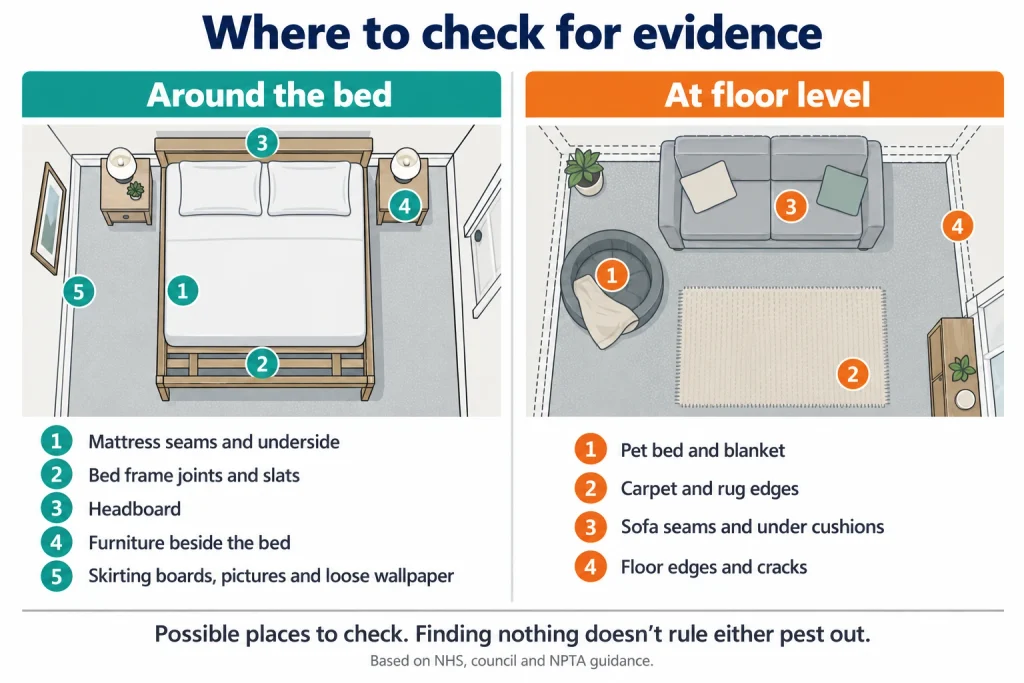
Since the bites can’t settle it, look for physical evidence. Strip the bed and use a torch on these areas, following council guidance on bed bug signs:
- The mattress: seams, piping and the underside. Dark faecal spots, about 1mm wide like an ink dot, are usually found on the bed frame, upholstery or the bottom of the mattress.
- The bed frame and headboard: joints and slats. Small blood smears on bed linen or the headboard can be a sign.
- Furniture near the bed: upholstery and curtain pleats.
- The edges of the room: skirting boards, behind pictures, loose wallpaper and electrical switch plates.
What you might find: live adults around 5mm long that can be dark yellow, red or brown, moulted skins, pale-white eggs and empty eggshells, and spots of blood from bites or from squashing a bed bug.
These clues guide an investigation but don’t always confirm an infestation. A single speck can have another cause, and finding nothing doesn’t rule bed bugs out, as they hide in small gaps and early signs are easy to miss. Bed bugs are also found in both clean and dirty places, so a spotless bedroom proves nothing either way.
Can You Have Fleas Without Pets?
Yes. Most flea infestations begin when pets bring fleas indoors, but fleas can arrive other ways, and they can outlast the pet.
- Pets that lived there before. Fleas can remain in the pupal stage inside their cocoons for months before emerging, so flea activity can appear after an animal has left the property. UK council guidance says this can lead to infestations long after the cat or dog has gone. Animal fleas generally prefer their usual hosts, but they may feed on people when that host is absent or the infestation is heavy. Estimates of how long fleas can wait vary, from several months to as long as a year.
- What wakes them. According to a study , fleas sense body heat, carbon dioxide and especially vibrations from movement.
- Other routes. Fleas can arrive via second-hand furniture or on shoes and clothing. In homes without pets, Texas A&M AgriLife notes they may be coming from wildlife.
None of this proves fleas are the cause. It only means a home without pets isn’t automatically flea-free, particularly if you’ve recently moved in or a previous occupant had animals.
Where Do Fleas Hide in the Home?
Adult fleas live on animals, but the immature stages are in the home. Eggs fall into carpets and floorboards, and areas where pets roam and rest deserve attention, including under furniture, under chair and sofa cushions, and cracks and crevices in floors and along walls.
Check these places:
- Pet resting areas: beds, blankets and favourite sofa spots. Look for flea dirt, which looks like small dark specks or grains of fine sand. To test it, add a few drops of water. Flea droppings turn red.
- Carpets, rugs and floor edges: look for small dark insects jumping.
- Sofas and upholstered chairs: along seams and under cushions.
- Any pets: scratching, biting or grooming a lot is a recognised sign.
These are possible habitats, not proof. One US university extension estimates that only about 5% of a typical home flea population are adults, so you can see very little and still have a problem. That’s why finding no fleas doesn’t rule them out.
How Bite Marks May Look on Black and Brown Skin
Redness is the clue most photographs rely on, and it isn’t always visible. The NHS says an insect bite lump may look red, but it may be more difficult to see on black or brown skin, though you should be able to feel it. On black or brown skin, bed bug bites may look brown, red or purple and may be harder to see.
If you’re comparing flea bites vs bed bug bites on black or brown skin, colour alone is an unreliable guide. In practice:
- Use touch as well as sight. Feel for raised, itchy lumps and note where they are and whether there are several together.
- Don’t try to match your skin to photographs. Rely on the evidence in your bed and home instead.
- Check for infection by touch. NHS advice lists skin that feels hot, a painful or swollen area, or pus as reasons to see a pharmacist, and notes that redness is harder to see on brown and black skin.
If you have symptoms of a serious allergic reaction, such as sudden swelling of the lips, mouth, throat or tongue, or struggling to breathe, follow NHS advice and call 999.
What to Do If You Still Cannot Identify the Cause
Use this table to work through the evidence. Each clue points one way but proves little alone.
| Clue | Where to look | What it may suggest | Limits |
|---|---|---|---|
| Blood spots, dark specks, shed skins, pale eggs | Mattress seams and underside, headboard, bed frame, nearby furniture | Bed bugs | A single mark can have other causes |
| Small, flat, reddish-brown insects | Seams, frame joints, behind pictures | Bed bugs | Easy to miss in small gaps |
| Black specks that turn red when wetted | Pet bedding, rugs, floor edges | Fleas | Not every black speck is flea dirt |
| Small insects jumping | Carpets, upholstery | Fleas | Not seeing them doesn’t rule fleas out |
| Bites but no other evidence | n/a | Unclear | Doesn’t rule out either pest |
Then:
- Repeat the check in good light, including the bed, soft furnishings, carpets and pet areas, and note where any marks appear.
- Ask your vet about flea treatment for pets, as councils advise vet-recommended products.
- Avoid treating blindly. Hastings Borough Council notes that amateur pesticide products can sometimes cause bed bugs to spread into other rooms, and the NHS says it’s very difficult to get rid of bedbugs yourself. The NPTA adds that DIY sprays alone may not target all flea life stages.
- Look after your skin. Bed bug bites usually clear up on their own in a week or so. The NHS advises seeing a GP if bites stay very painful, swollen or itchy after pharmacist treatment, or if pain or swelling is spreading.
- Ask for an assessment if you’re still unsure.
If you suspect bed bugs, our bed bug control service starts with an inspection. If fleas look more likely, our flea control service begins by discussing the signs you’ve noticed and the areas affected. Tell us what you’ve found around your home. We’ll look at the evidence, not just the bites, before advising on the next step.