

Rat and Mouse Control in London
Practical, thorough rodent control for London homes, landlords and businesses. We inspect your property, identify entry points and put a tailored treatment plan in place to address rat and mouse activity.
Professional Rat and Mouse Control for Homes and Businesses
Discovering rats or mice inside a property requires a structured, practical response. At Correct Pest Solution, we provide professional rat and mouse control across London for homeowners, tenants, landlords, property managers and commercial premises. Rather than relying on off-the-shelf traps or guesswork, we focus on finding out why rodents are entering your building, where they are active and which treatment methods suit your specific layout.
Mice and rats can move through concealed wall voids, floorboards, service ducts and adjoining structures—a common challenge in terraced houses, converted flats and busy commercial units in London. A professional assessment looks beyond the first sighting to inspect likely nesting areas, travel routes and structural gaps.
Whether you have noticed fresh droppings in a kitchen, heard scratching in a loft or need reliable rodent control for a business, our technicians explain their findings clearly and set out a sensible plan for treatment and prevention.
Why Are Rats and Mice a Problem?
Food and Surface Contamination
Rats and mice forage around food storage areas, worktops and waste bins, leaving behind droppings, urine and hair. This can contaminate food supplies and preparation surfaces in both domestic kitchens and food businesses.
Property and Electrical Damage
Rodents have continuously growing front teeth and gnaw on timber, plasterboard, pipe insulation, food packaging and electrical wiring. Damaged cables and pipework can lead to costly repairs and potential safety hazards.
Hidden Nesting and Breeding
Mice and rats shelter in quiet, undisturbed spaces such as beneath floorboards, behind kitchen kickboards and inside lofts. Because rodents breed quickly when food and warmth are available, small problems can grow if left untreated.
Noise, Odours and Disruption
Scratching beneath floors or inside ceiling voids—particularly at night—can disturb sleep and cause ongoing stress. For businesses and landlords, visible rodent activity can also affect daily operations and tenant confidence.
Why Are Rats and Mice in My Property?
Rodents enter buildings in search of three essentials: shelter, accessible food and water. Even clean, well-maintained properties can experience rat or mouse activity if small structural gaps allow pests to get inside from neighbouring buildings, gardens, alleyways or drainage systems. Mice can squeeze through gaps as narrow as the width of a pencil, while rats often exploit damaged air bricks, broken drain covers, gaps around utility pipes or worn door seals.
In London, closely joined properties make movement between buildings easier. Shared service risers in blocks of flats, interconnected loft spaces in terraced homes, basement voids and commercial waste areas can all act as travel corridors for rodents. Seasonal weather changes, nearby building work or defective drainage can also push rats and mice indoors, making a thorough property inspection essential before deciding on treatment.
Common Signs of a Rat or Mouse Infestation
Rodent Droppings:
Dark, pellet-shaped droppings found inside cupboards, along skirting boards, behind appliances, under sinks or in loft spaces.
Gnaw Marks:
Fresh tooth marks or wood shavings on skirting boards, door corners, food packaging, plastic containers or under-sink pipework.
Scratching Sounds:
Scurrying, gnawing or scratching noises coming from ceiling voids, partition walls, lofts or beneath floorboards, especially after dark.
Shredded Nesting Material:
Gathered piles of shredded paper, cardboard, loft insulation or fabric tucked into warm, hidden corners and airing cupboards.
Greasy Rub Marks and Tracks:
Dark smudge marks along walls, pipes or entry holes caused by oily rodent fur brushing repeatedly against the same routes.
Unusual Odours or Sightings:
A persistent, musky, ammonia-like smell in enclosed spaces, or daytime sightings of mice or rats around kitchens, gardens or bin stores.
Concerned About Rat or Mouse Activity?
Professional Rat and Mouse Treatment Planning
Identifying the Species and Extent of Activity
Rats and mice behave differently and require distinct equipment and baiting strategies. We inspect droppings, gnaw marks and harbourage areas to confirm which pest is present and how widespread the activity is.
Locating Nesting Sites and Travel Routes
Technicians check behind kitchen plinths, inside service cupboards, in lofts and around exterior perimeters to map where rodents are sheltering and feeding.
Checking Structural Entry Points
We look for practical access routes such as gaps around waste pipes, damaged external vents, unsealed floorboards and vulnerable door thresholds.
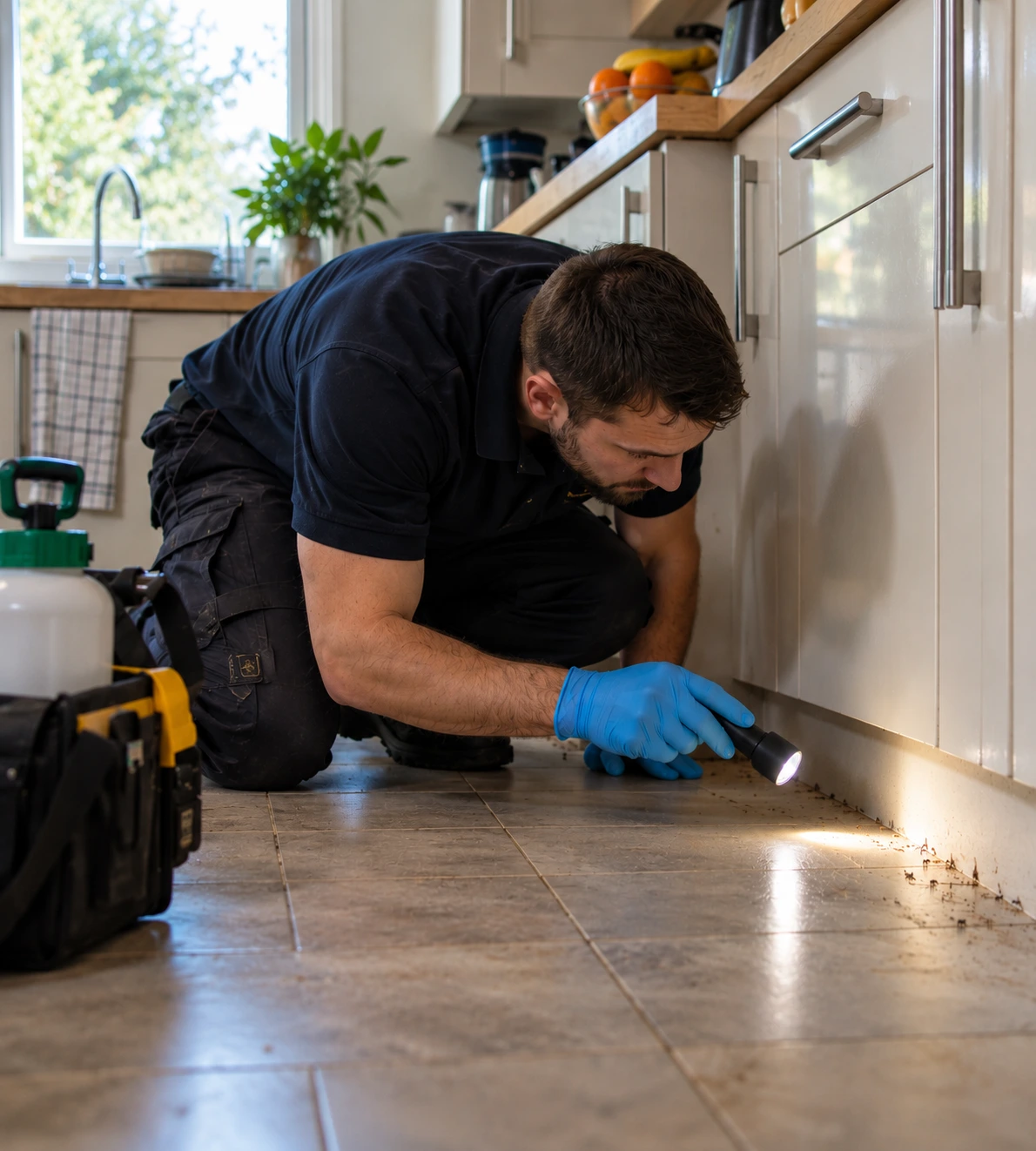
How Our Professional Rat and Mouse Control Service Works
1. Inspection and Assessment
We examine internal and external areas of your property to identify the rodent species, locate active runs and check potential entry points.
2. Tailored Treatment
Depending on the property and findings, we put in place suitable control measures such as professional traps or tamper-resistant bait stations in targeted areas.
3. Entry-Point Proofing & Advice
We carry out practical rodent proofing to block accessible entry gaps and provide clear recommendations on building defects and housekeeping to help stop pests returning.
Professional Rat and Mouse Treatment and Aftercare

No single rodent treatment suits every building or infestation. After inspecting your property, our technician will recommend an approach suited to the species, the level of activity and the environment. This may involve professional trapping, the placement of appropriately secured, tamper-resistant bait stations in concealed areas, or a combination of control methods designed for indoor or external use.
Safety and clear communication are central to how we work. When bait stations or traps are used, they are positioned carefully away from general access areas, and your technician will explain any precautions you need to follow around children, pets or stock. Because rodents—especially rats—can be cautious around new objects in their environment, control methods often require time and structured monitoring rather than producing an instant result overnight.
Alongside physical treatments, what happens in the property between visits makes a significant difference. Following your technician’s aftercare guidance—such as removing competing food sources, keeping waste sealed and not disturbing placed equipment—helps make the treatment as effective as possible.
How to Reduce the Risk of Ants Returning
Rat and Mouse Prevention Recommendations
Store food in rigid containers:
Keep dry pantry goods, grains and snacks in sealed plastic, metal or glass containers rather than cardboard boxes or thin bags.
Manage household and commercial waste:
se bins with tight-fitting lids, clear away food spills promptly and avoid leaving rubbish bags on the floor overnight.
Control access to pet and bird food:
Pick up uneaten pet food bowls at night and pause garden bird feeding if rats or mice have been spotted nearby.
Maintain doors and building fabric:
Fit bristle strip draught excluders to external doors with gaps underneath and repair broken drain grates or damaged masonry.
Keep storage and garden areas tidy:
Reduce clutter in lofts, under-stair cupboards and around external walls so rodents have fewer undisturbed places to shelter.

Contact Us Today
Trusted by Our Customers


 Trustindex verifies that the original source of the review is Google.
 Trustindex verifies that the original source of the review is Google.
 Trustindex verifies that the original source of the review is Google.
 Trustindex verifies that the original source of the review is Google.
 Trustindex verifies that the original source of the review is Google.
 Trustindex verifies that the original source of the review is Google.
 Trustindex verifies that the original source of the review is Google.
 Trustindex verifies that the original source of the review is Google.
 Trustindex verifies that the original source of the review is Google.
 Trustindex verifies that the original source of the review is Google.
Why Correct Pest Solution?
Thorough Property Assessments:
We inspect active areas, hidden voids and building perimeters to understand the problem before starting treatment.
Clear, Practical Explanations:
Our technicians explain what signs have been found, which treatment options are suitable and what precautions you need to take.
Practical Rodent Proofing and Prevention:
Rather than only treating current activity, we carry out physical rodent proofing to seal accessible entry gaps and provide practical housekeeping advice to help reduce future problems.
Support for Homes and Businesses:
We work with homeowners, tenants, landlords, managing agents and commercial premises across London, with 24/7 emergency callout availability.
Appropriate Follow-Up and Monitoring:
We work with homeowners, tenants, landlords, managing agents and commercial premises across London, with 24/7 emergency callout availability.
Straightforward, Tailored Quotes:
Because every building and infestation is different, we price our work fairly based on the actual assessment, treatment and proofing your property requires rather than one-size-fits-all packages.
Looking for Rat and Mouse Control in London?
Rat and Mouse Control FAQs
What are the common signs of rats or mice?
Common indicators include dark pellet-shaped droppings inside cupboards or along skirting boards, gnaw marks on wood or food packaging, scratching noises inside walls or lofts at night, shredded nesting material and greasy rub marks along regular travel routes. Seeing even one or two of these signs suggests it is sensible to arrange a professional inspection
How do rats and mice get into a property?
Rodents enter through small structural gaps in search of warmth, shelter and food. Common entry routes include gaps around plumbing and utility pipes, broken air bricks, damaged drain covers, spaces beneath external doors and shared wall or floor voids in terraced houses, flats and commercial buildings.
Can Correct Pest Solution treat both rats and mice?
Yes. We provide professional rat and mouse control for domestic and commercial properties in London. Because rats and mice differ in body size, feeding habits and behaviour, we inspect your property first so that the equipment, traps or bait stations used are matched to the right species.
What happens during a rodent-control visit?
Our technician inspects the affected areas and likely access routes to identify the pest species, assess the level of activity and locate entry points. We then discuss our findings with you, put an appropriate treatment plan in place and provide practical advice on housekeeping and proofing to reduce future activity.
How much does rat and mouse pest control cost?
There is no single fixed price because the work required varies between properties. The cost depends on the type and size of the building, whether the problem involves rats or mice, the extent of the activity, ease of access and the treatment and follow-up visits needed. Contact us with details of your issue for a tailored quote.
How long does treatment take to work?
Treatment timescales vary depending on the species, how established the infestation is, the layout of the building and whether competing food sources or structural entry points remain accessible. Some problems reduce over a couple of visits, while more complex properties or cautious rodents may require ongoing monitoring.
Are precautions needed for children and pets?
Yes, responsible precautions are always necessary during rodent treatment. Where treatments are placed, we use professional methods such as tamper-resistant bait stations or positioned traps in concealed areas, and your technician will explain specific safety steps to follow so children and pets are kept away from treated zones.
Can you help prevent rodents from returning?
During our visit, we identify likely entry points and environmental factors that attract rats or mice to your property. We provide clear proofing and prevention advice—such as sealing pipe gaps, improving waste storage and addressing building defects—to help reduce the risk of rodent re-infestation. We can also carry out proofing if you need our services.