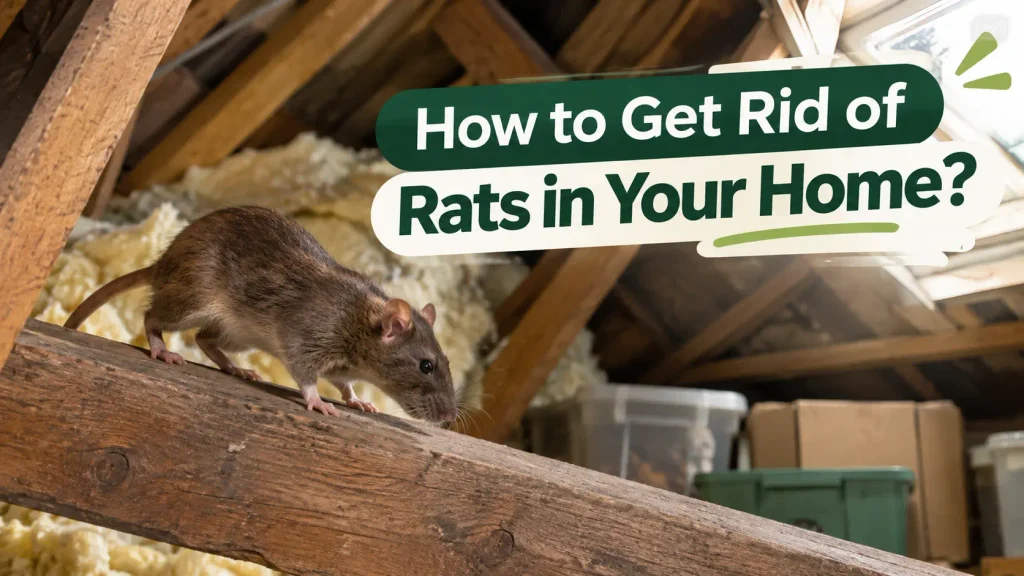
Finding a rat in your kitchen or hearing scratching above your bedroom ceiling can be unsettling. You may worry about damage, contamination or whether your home is clean enough. But rats can enter well-kept properties too. A gap around a pipe, a damaged drain or an accessible food source may be all it takes.
The best way to get rid of rats is to deal with the activity already inside while finding and addressing the reasons they entered. Traps or poison alone may reduce the problem, but if rats can still get into the building, further activity may follow.
What to Do First If You Find a Rat
Before buying traps or trying home remedies, take a few sensible steps:
- Keep your distance. Do not corner, chase or try to catch a rat by hand. Keep children and pets out of the affected room.
- Record what you have seen. Note the room, time and location. Take photographs of droppings, gnaw marks or possible entry holes if you can do so safely.
- Secure food and rubbish. Put dry food and pet food into sealed containers. Close bin lids and clear away accessible food waste.
- Look for other signs. One sighting does not tell you how many rats are present. Check for fresh droppings, damage or repeated noises.
- Do not block an active opening straight away. A rat could still be inside a wall, floor or roof space. Blocking its route may trap it in the building.
- Get advice if activity continues. Contact your local council or a pest-control professional if you find repeated signs or cannot identify where the animal is going.
How to Recognise Signs of Rats in Your House
You may find evidence of rats before you see one. Check quiet areas such as kitchen cupboards, spaces behind appliances, lofts, garages and under floorboards.
Common signs include:
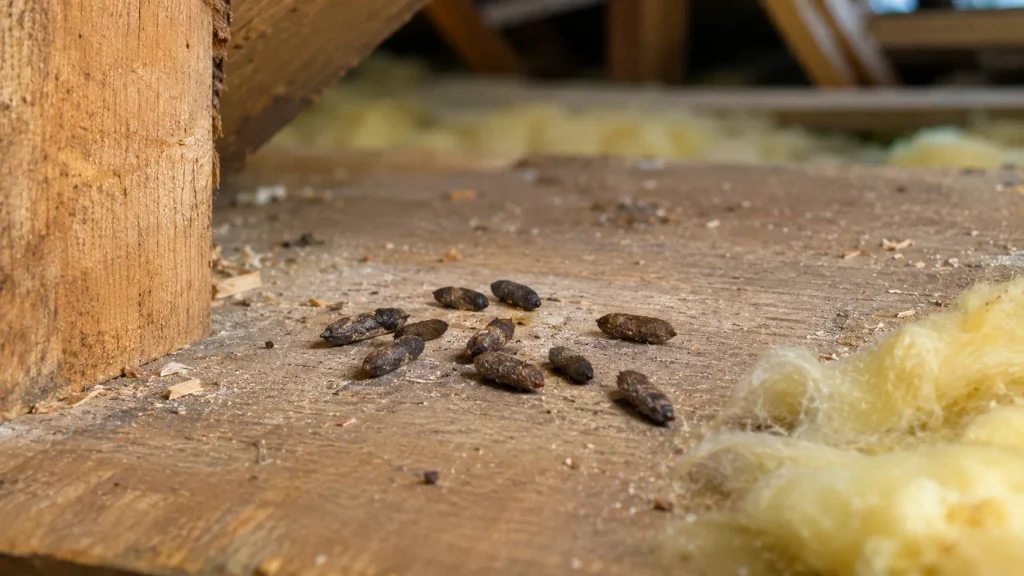
- Droppings: Dark, pellet-shaped droppings, often found in groups near feeding or travel areas.
- Gnaw marks: Rough marks on wood, plastic, food packaging, pipe insulation or cables.
- Greasy marks: Dark smudges along skirting boards, pipes and walls where rats repeatedly pass.
- Footprints or tail marks: Tracks in dusty areas, such as an unused loft or cellar.
- Nesting material: Shredded paper, cardboard, fabric or insulation gathered in a sheltered space.
- Scratching and scurrying: Noises in ceilings, walls or under floors, particularly at night.
- Unusual smells: A persistent musky or ammonia-like smell in an enclosed area.
These signs are described in the British Pest Control Association’s rat advice.
No single sign confirms how many rats are present. Scratching in a loft, for example, can also come from mice or squirrels. It is worth checking the evidence before choosing a control method.
What Do Rat Droppings Look Like?
Rat droppings are usually dark and pellet-shaped. They are noticeably larger than mouse droppings and may appear in clusters along regular routes or near food.
Avoid touching them with bare hands. Do not sweep or vacuum them dry. The safe-cleaning section below explains how to deal with them.
Is It a Rat or a Mouse?
A large mouse can sometimes be mistaken for a young rat. Size and appearance can help, but droppings and other signs should also be considered.
| Feature | Brown rat | House mouse |
|---|---|---|
| Body size | Around 15–28cm, excluding tail | Around 6–9cm, excluding tail |
| Appearance | Sturdy body and blunt snout | Smaller body and pointed snout |
| Ears | Relatively small | Larger compared with its head |
| Droppings | Larger, dark pellets | Much smaller, rice-like droppings |
These measurements are approximate and are based on the BPCA’s rodent identification guidance.
Young rats can be difficult to identify by appearance alone. If the signs point to mice instead, read our guide to getting rid of mice humanely.
Where Do Rats Hide and How Do They Enter Homes?
Brown rats prefer sheltered places where they can find food and avoid disturbance. Inside a house, they may shelter:
- Beneath kitchen units and appliances.
- Under floorboards and inside sub-floor spaces.
- In wall cavities and boxed-in pipework.
- In lofts and roof spaces.
- In basements, garages and storage areas.
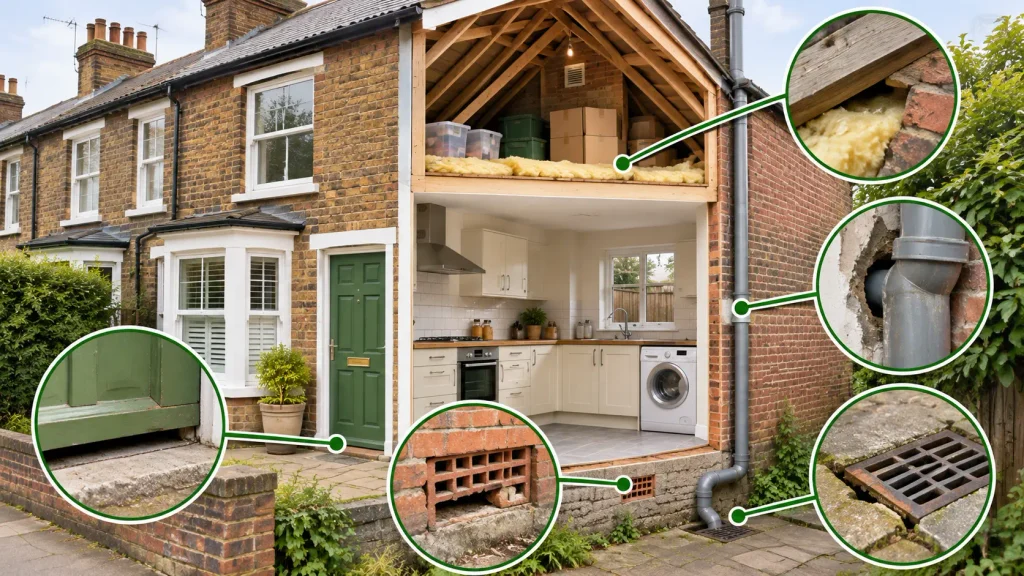
Outside, look around sheds, decking, compost areas, stored wood and overgrown corners of gardens.
Rats are mainly active at night, but they can also be seen during daylight. They are capable climbers and swimmers, so do not assume that an upper floor or a property without a garden is protected. The RSPCA’s information on wild rats and mice explains their behaviour and habitats.
Common ways rats enter buildings include:
- Gaps around heating, water and waste pipes.
- Damaged air bricks or missing ventilation mesh.
- Cracks in external walls and foundations.
- Poorly fitting external doors.
- Damaged drain covers or defective drainage.
- Openings around roof edges and service routes.
Thames Water explains that rats can enter through a gap as small as 1.5cm. This is why even a small opening around pipework deserves attention.
In London, connected buildings can make investigations more complicated. Terraced houses, converted flats and shared service areas may have spaces or routes that are not easy to inspect from inside one property. Do not assume the source is next door or in the drains without evidence.
How to Make Your Home Less Attractive to Rats
Removing accessible food and shelter will make a property less inviting. These steps help prevent activity, although they may not clear an established infestation on their own.
Store food properly. Keep cereals, flour, pet food and other dry goods in sturdy containers with tight-fitting lids. Thin bags and cardboard packaging are easier for rodents to damage.
Manage rubbish. Use bins with secure lids. Do not leave food waste or rubbish bags where rats can reach them. Clean food residue from recycling containers when needed.
Take care with bird food. Spilled seed can attract rats into gardens. Use a bird table or feeder basket to catch loose seed rather than scattering it on the ground.
Keep compost secure. Cover compost areas properly and consider suitable wire mesh to reduce access from below.
Reduce hiding places. Clear accumulated rubbish, unused materials and woodpiles from areas close to the property. Keep sheds and storage areas tidy.
Deal with leaks and drainage problems. Repair leaking pipes, keep drain inspection covers in good condition and avoid pouring cooking fat, grease or food scraps down the sink.
How to Find and Seal Rat Entry Points
Proofing means repairing the openings that allow rodents into a building. It is an important part of long-term control.
Start by inspecting the outside of the property from ground level. Look around pipe entries, doors, vents, air bricks, walls, extensions and the edges of the roof. Inside, check beneath sinks, behind kitchen appliances and around pipes passing through floors or walls.
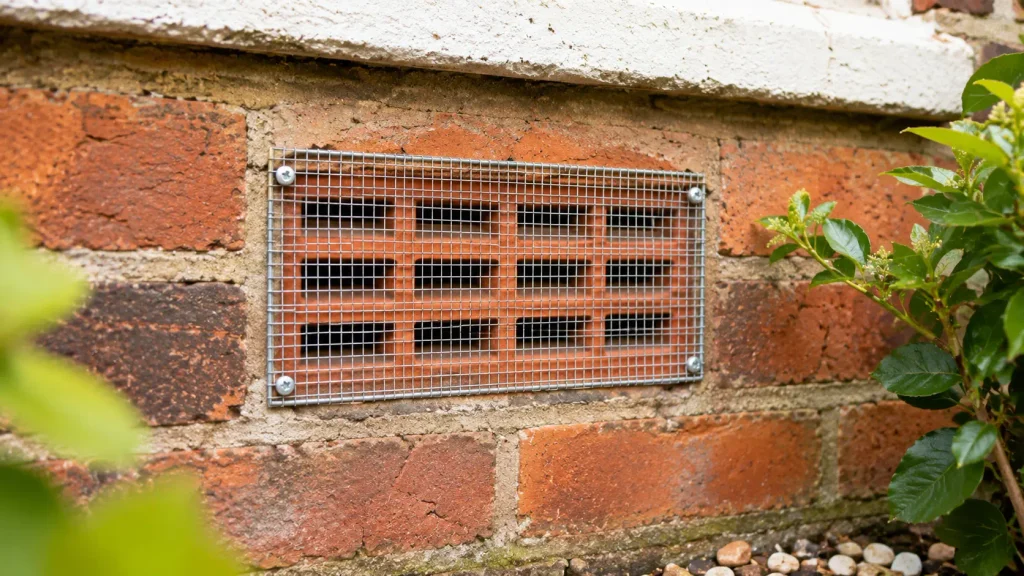
For small gaps in suitable masonry, the BPCA recommends materials such as wire wool embedded in quick-setting cement. Damaged ventilation mesh should be replaced with suitable rodent-resistant mesh without blocking the airflow it provides.
For air bricks with worn mesh, Thames Water recommends externally fitted 3.15mm insect mesh.
Do not assume ordinary filler or expanding foam alone will keep rats out. Rodents can gnaw through some soft materials. Ask a competent tradesperson to assess openings around drains, cables, gas pipes or other services where an unsuitable repair could cause damage.
Check that the space is clear before permanently sealing an opening. If rats may still be inside a wall, roof or floor void, arrange an inspection before blocking their route. Otherwise, you could leave an animal trapped in an inaccessible space.
Do Rat Deterrents and Home Remedies Actually Work?
People often try peppermint oil, scented sprays, strong-smelling household products or ultrasonic plug-in devices before contacting a pest controller.
The problem is that making one small area less attractive does not remove a nest, close an entry gap or deal with an established rat problem.
A recent 2026 research review of ultrasonic pest-control devices found that responses among rodents could be temporary and that field studies did not show measurable reductions in pest populations. The findings do not support relying on a plug-in device as a standalone solution.
Scent-based products should be treated with similar caution. Even if a smell changes a rat’s behaviour briefly, it will not repair damaged pipework or remove accessible food.
Your money is generally better spent on identifying entry points, securing food and arranging suitable control where rats are already established.
Traps, Poison and Humane Rat Control
There is no single control method that suits every property. The right approach depends on the number of signs, where the rats are active, the building layout and whether children, pets or other wildlife could be exposed.
Traps: Use only traps intended and approved for rats, and follow their instructions. They must be positioned so children, pets and non-target animals cannot reach them. The GOV.UK guidance on pest control explains the rules for using permitted traps and protecting other wildlife.
Rodenticides (rat poison): Products sold for general public use in the UK must be used within a bait box. The product label explains who can use the product, where it may be placed and what precautions are required. Some professional-use products have additional training and certification requirements. Read the HSE guidance on controlling rodents safely before considering any rodenticide.
Poison can also create problems when a rat dies somewhere inaccessible, such as beneath floorboards or inside a wall cavity. There may be an unpleasant smell, and poisoned rodents can pose a risk to animals that eat them. This is one reason to discuss the options with a professional rather than choosing a product simply because it is available.
Live-capture traps: A live-capture trap is not automatically humane. The RSPCA warns that trapped rats may become stressed, cold or injured. It also says that the survival outcomes of releasing rats elsewhere have not been properly studied, and that unfamiliar territory may expose them to a lack of food, competition and predators.
If avoiding unnecessary suffering matters to you, prevention and proofing are the best starting points. Do not assume that carrying a trapped rat to a park or field is a safe or humane solution.
Glue traps: In England, it is against the law to set a glue trap to catch rodents unless you have a licence. Licences are restricted to professional pest controllers and exceptional circumstances.
How to Clean Rat Droppings Safely
Rat urine and droppings can carry germs, so avoid disturbing them unnecessarily.
Do not sweep or vacuum dry droppings, urine or nesting material. This can send contaminated particles into the air. For a small affected area:
- Keep children and pets away.
- Wear household gloves. A suitable FFP1 or FFP2 face mask is also recommended where possible.
- Use a wet wipe or damp kitchen towel to lift droppings and contaminated material.
- Put the waste into a plastic bag before placing it in the rubbish.
- Clean and disinfect the affected surface, following the product instructions.
- Remove gloves carefully and wash your hands thoroughly with soap and water.
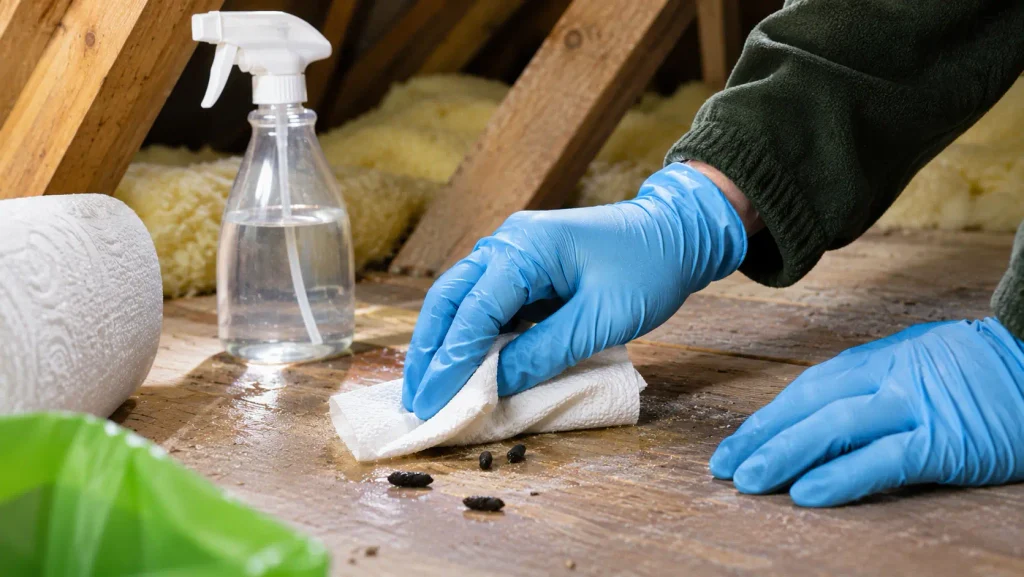
These precautions follow GOV.UK guidance on cleaning rodent urine and droppings. Although the guidance is written for pet-rodent owners, it specifically covers rat and mouse waste. Large amounts of contamination, especially in loft insulation or inaccessible spaces, may need professional assessment.
Rats can carry infections, including leptospirosis, which spreads through the urine of infected animals. It is rare in the UK, but contact with infected urine can cause illness. The NHS leptospirosis guidance explains the symptoms and when to seek medical advice. If you develop flu-like symptoms after possible exposure, contact a GP and mention the rodent contact.
What to Do About Rats in a Loft or Inside Walls
Scratching above a bedroom or beneath floorboards does not confirm that rats are responsible. Mice and squirrels can make similar noises.
Do not pull out insulation, crawl into an unsafe loft or start opening walls to follow sounds. You could disturb contaminated material or damage cables and pipework.
Instead, note where and when the noises happen, look for signs from a safe position and arrange an inspection if activity continues. A pest professional can investigate likely travel routes, access points and nesting areas.
If there is a persistent unpleasant smell and you suspect a rat has died inside a wall or roof void, avoid cutting into the structure yourself. Correct Pest Solution also provides professional dead pest removal for inaccessible carcasses.
When to Call a Professional Pest-Control Service
Professional help is sensible when:
- You keep finding fresh droppings or gnaw marks.
- You hear repeated activity in walls, ceilings or the loft.
- You see signs in several rooms.
- You cannot find the entry point.
- You suspect a damaged drain or shared building space.
- DIY measures have not stopped the activity.
- Children or pets make it difficult to use traps or bait safely.
Ask the company whether its inspection covers the species, likely nesting areas, travel routes and entry points. It should also explain the proposed treatment, safety precautions and any follow-up work. You can also connect us for Professional Pest control Service.
You can check whether your council offers a pest-control service, although charges and services vary by borough.
If You Rent Your Home in England
Tell your landlord or managing agent about the problem in writing. Include photographs, dates, affected rooms and any repairs that may be needed.
Under Shelter’s guidance for rented homes in England, a landlord must deal with an infestation caused by a repair they are responsible for, and should address pests that were present when the tenant moved in. Responsibility depends on the circumstances. Tenants should also store food and rubbish properly.
If the issue is not addressed, you can ask the council’s environmental health team for advice. Under the Prevention of Damage by Pests Act 1949, local authorities have powers to require owners or occupiers to take reasonable steps to deal with rats or mice.
What If Rats Are Coming Through Drains?
A damaged drain can provide an entry route, but not every rat problem is caused by the sewer.
Property owners or landlords are generally responsible for private drains serving their property, while the sewerage company maintains public sewers. The exact boundary and responsibility can depend on the drainage layout. Thames Water’s guidance on rodents and sewer responsibility explains what to do when a drain defect is suspected. Contact the relevant water company for your area if a survey identifies a possible public-sewer problem.
Need Professional Rat Control in London?
Still dealing with rats in your home? Correct Pest Solution provides professional rat and mouse control in London. Contact our team to discuss the problem and arrange the right help for your property.
Frequently Asked Questions
Does Seeing One Rat Mean I Have an Infestation?
Not necessarily. A single sighting does not tell you how many rats are present. Look for fresh droppings, gnawing, repeated sightings or other signs before judging the extent of the problem. Shelter explains that one or two sightings alone are unlikely to prove an infestation without other evidence.
Can Rats Enter a Clean House?
Yes. Rats can use gaps around pipes, damaged vents, drains and shared building spaces. Keeping food and rubbish secure helps, but cleanliness alone cannot prevent rodents entering through structural openings.
Will Peppermint Oil or Ultrasonic Devices Get Rid of Rats?
Do not rely on them to clear an established problem. Scented products may affect an animal’s behaviour in a small area, while research on ultrasonic devices has found no reliable evidence that they reduce pest populations in real-world settings. Proofing, food control and suitable treatment are more dependable steps.
Can Rats Come Into a House Through Drains?
Yes, a defective drain can provide an access route. However, not every rat sighting is linked to the sewer. If activity continues and the entry point is unclear, ask a pest professional whether a drainage inspection is appropriate.
Should I Seal a Hole Where a Rat Is Entering?
Only after you are confident that no animal is still inside the space. If the opening leads into a wall, floor or roof void, have the route assessed before permanently sealing it.
How Long Does It Take to Get Rid of Rats?
There is no reliable fixed timeframe. It depends on the level of activity, where rats are sheltering, the control method and whether entry points can be repaired. Ask your pest controller what monitoring and follow-up will be needed.
What to Do Next
Start by securing food and rubbish, keeping children and pets away from affected areas, and recording the signs you have found. Check accessible entry points, but do not block an opening if a rat may still be inside.
If activity continues, appears in hidden spaces or returns after previous treatment, arrange an inspection that looks beyond the first sighting. The lasting answer is not just removing the rat you saw. It is finding how it got in and reducing the chance of another one following.